When to Call for Emergency Water Intrusion
Basement flooding right now? Learn what counts as an emergency, the immediate steps to take, and what our emergency response covers in Wichita.
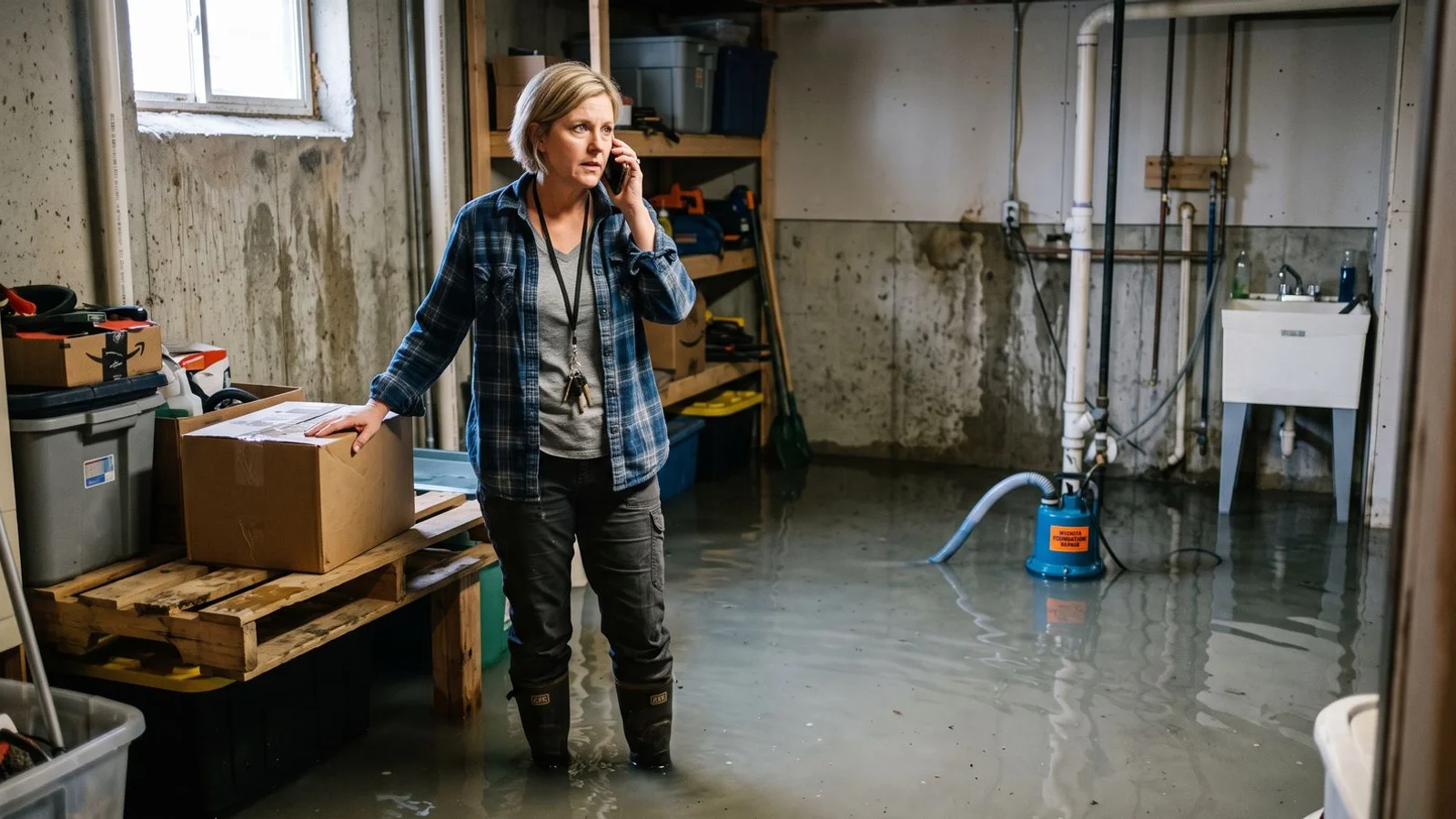
Active basement flooding is one of the few home problems where the right response is immediate action. If your basement is actively taking on water, call (316) 613-4575 right now.
From what our crews have seen, securing reliable emergency basement flooding help Wichita often comes down to acting before the drywall acts as a sponge. You have a narrow window before minor seepage becomes a major disaster. We handle these calls constantly during the spring storms that hit south-central Kansas, where expansive clay soil holds heavy rainfall right against your foundation.
Let’s look at the data, what it is actually telling us, and then explore exactly how emergency intrusion calls are handled.
What counts as an emergency
Not every wet basement requires an immediate response. We define a true emergency as any situation where water intrusion actively threatens the structural integrity of your home, your personal safety, or your electrical systems. The difference between a routine fix and a crisis often comes down to volume and speed.
An emergency is:
- Active flooding with water visibly rising in the basement
- Water covering more than a small, isolated area of the floor
- Water contacting electrical outlets, panels, or exposed wiring
- Structural damage happening in real time (such as loud popping noises, active bowing, or widening wall cracks)
- Sewage backup pouring into the basement from municipal lines
Our crews see plenty of false alarms that could wait for standard scheduling. Persistent damp spots, seepage after a two-inch Wichita rainstorm that dries by morning, or a slow leak you have been meaning to address are not emergencies.
According to a 2026 Gitnux water damage report, preventable plumbing and site drainage failures account for a massive portion of the $15 billion annual cost in the US. You must act fast when dealing with Category 3 black water from a City of Wichita Public Works sewer backup, as it contains dangerous pathogens. We treat these high-risk scenarios with urgency because the damage scales up exponentially by the hour.
Immediate steps before help arrives
Before help arrives, you must take specific steps to protect yourself and your property. We always tell homeowners to prioritize personal safety over saving replaceable items. A flooded basement is a hazardous environment.
1. Safety first around electricity
If water is near electrical outlets, panels, or wiring, do not walk in it. Local utility provider Evergy advises keeping a safe distance from any standing water that might carry an electrical current, so cut the power immediately if you can safely reach the main breaker panel while standing on a dry surface. We wait for a licensed electrician to clear the scene if the water level is already touching live circuits.
2. Move valuables to higher ground
Boxes resting directly on the floor act like wicks, pulling moisture upward rapidly. Get your electronics unplugged and move important documents to the first floor.
Do not try to carry heavy furniture up the stairs while navigating a slippery floor. Our team recommends prioritizing irreplaceable items like family photos or essential legal records. These items should be moved upstairs immediately.
3. Photograph the intrusion
Documenting the scene is critical for your insurance claim and for proper diagnosis. Grab your phone and snap clear pictures of the water entry points, the highest water line on the wall, and any structural distress. A 2026 report from Angi notes that documented claims help cover basement cleanup costs, which now average around $4,000 nationwide.
4. Identify the source if it is obvious
Look for where the bulk of the moisture is entering the space. Water might be coming through a specific wall crack, pouring through a clogged window well, or bubbling up from the floor drain. Our dispatchers use this information to determine exactly what equipment to deploy first when the truck pulls into your driveway. This simple step saves critical minutes.
5. Do not try to fix it while it is happening
Filling cracks with hydraulic cement during an active flood simply does not work. The hydrostatic pressure from Wichita’s heavy clay soil pushes right through wet patches. We suggest focusing entirely on damage control and keeping your family safe. Your priority is getting everyone to a dry area.
What our emergency response covers
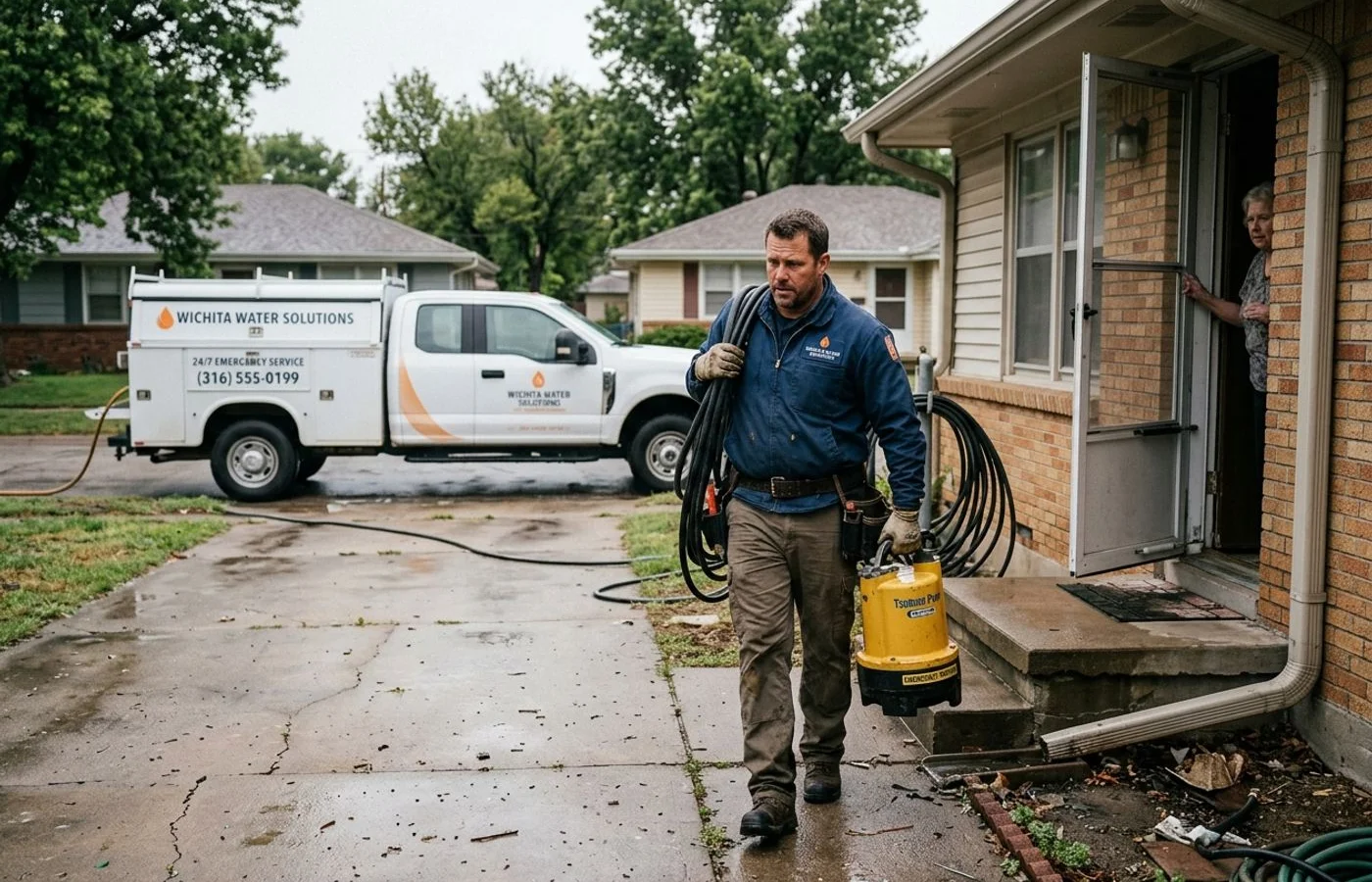
An emergency call focuses strictly on stopping the immediate influx of water and securing the property. We deploy specialized commercial-grade pumps and extraction tools that handle far more volume than a standard residential shop vacuum. High-capacity equipment mitigates the ongoing disaster much faster.
When the crew arrives, you can expect:
- Immediate water mitigation utilizing high-capacity submersible pumps if there is standing water
- Source identification completed as fast as possible to stop the bleeding
- Temporary containment measures to reduce further damage to your framing and foundation
- Assessment of urgent structural risk regarding bowing walls or failing supports
- Written summary detailing exactly what was done and what still needs to be done
Our emergency waterproofing wichita protocols are designed to stabilize your home today. Providing exceptional foundation repair that customers can rely on is our primary mission. Selling an expensive contract during a high-stress crisis goes entirely against that standard. The permanent fix is mapped out a few days later when everyone can review the situation calmly.
What emergency response does not cover
Emergency extraction stops the water, but it does not rebuild your finished basement. Water damage restoration, mold remediation, and finishing repair are entirely separate services handled by different specialists. You will need a dedicated restoration contractor after the bulk water is removed.
If your basement is finished and the water has soaked the drywall, the clock is ticking. Industry standards from the IICRC state that mold can begin growing on damp organic materials within 24 to 48 hours. We help you know exactly when to call a restoration expert to handle the tear-out process.
Technicians focus on the foundation, while restoration crews focus on the cosmetic finishes. This division of labor ensures you get specialized expertise for every phase of the recovery.
What happens after the emergency
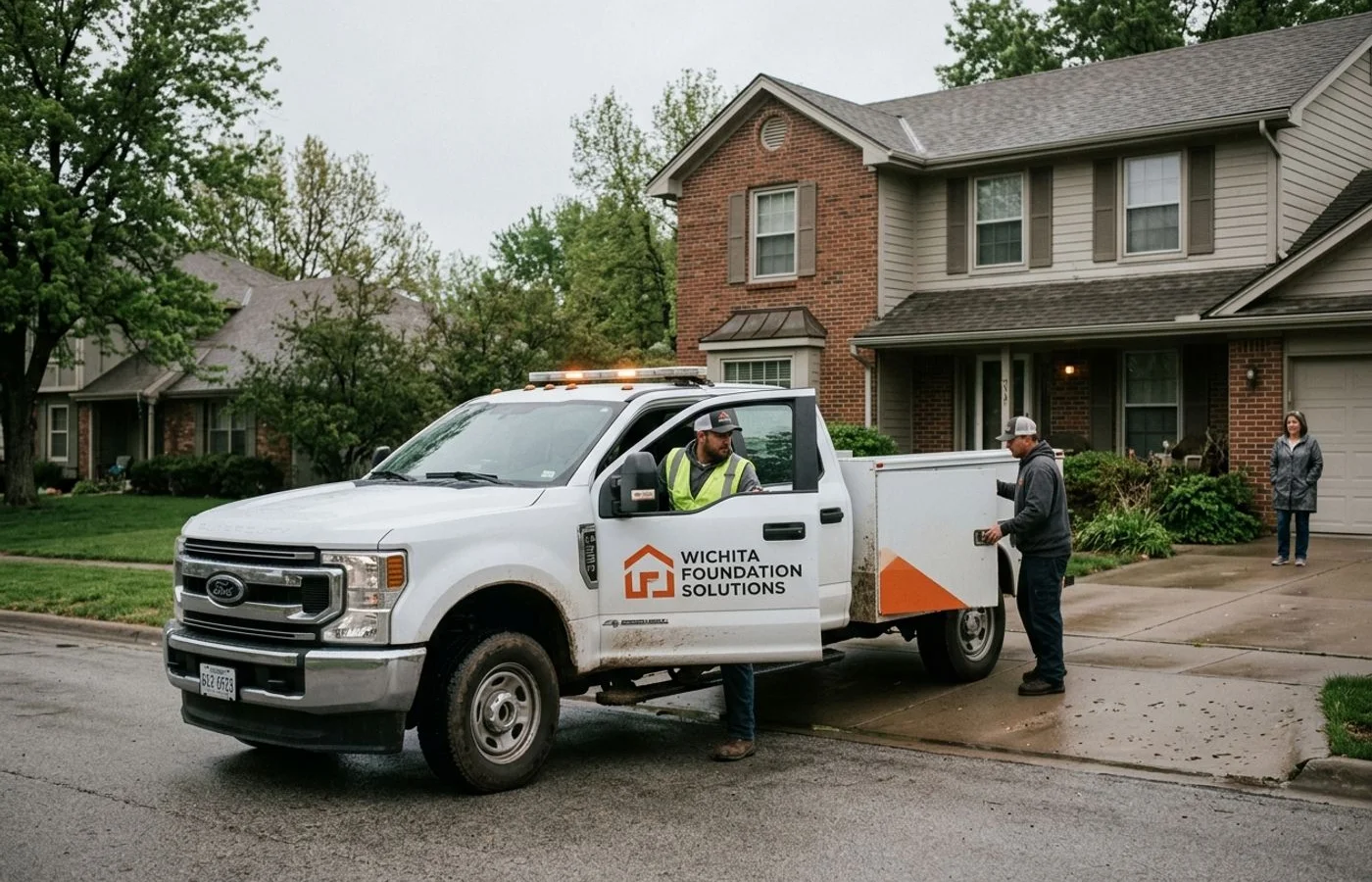
Once the immediate water is pumped out and the source is identified, the next phase is planning a permanent, engineered solution. We walk you through what the long-term fix looks like, ensuring your home is protected against the next major Kansas rainstorm. Homeowners receive a clear, transparent breakdown of the necessary repairs without any pressure.
That permanent solution may involve installing interior drainage channels, applying exterior waterproof membranes, or correcting the yard grading — the core of our basement waterproofing service. See our basement waterproofing guide for how the crew sorts intrusion sources and matches them with the right repair method. Our solutions are designed to manage the specific hydrostatic pressure created by local clay soils. This targeted approach keeps the basement dry year-round.
To understand the difference in scope, consider how these phases compare:
| Phase | Primary Goal | Timing | Typical Methods |
|---|---|---|---|
| Emergency Response | Stop active flooding and prevent immediate risk | Within hours | Sump pumps, temporary patching, power shutoff |
| Permanent Fix | Prevent future intrusion and stabilize foundation | Scheduled days/weeks later | Interior French drains, exterior grading, wall anchors |
The permanent fix is always priced at standard, scheduled rates. We never use emergency price gouging to take advantage of a stressful situation. Customers pay the exact same rate it would have been for a routine, pre-planned job.
How to reach us for emergency
If you need flooded basement help immediately, the fastest way to get a crew dispatched is to call the main line. We prioritize active-flooding calls ahead of routine scheduling to ensure homes in immediate danger get attention first. Call (316) 613-4575 right now to speak with the dispatch team.
You can also use the contact page and mark the request as urgent if you are dealing with a slower leak that still requires fast attention. Our staff monitors these requests closely during heavy rain events. Response times are kept as short as possible.
Stay safe around the standing water, and let the professionals handle the heavy lifting. We will handle the rest of the extraction and get your home back on solid ground. Your dry basement is just a phone call away.