How to Keep a Kansas Basement Dry Year-Round
A layered plan to keep your Wichita basement dry through every season, grading, gutters, sump, and waterproofing. What DIY can and can't fix.
Our team is often asked how to keep basement dry conditions consistent through the changing seasons. This process requires stacking small fixes that together stop water from penetrating foundation walls. We recommend tackling these repairs in a specific sequence to save both time and money.
Every solution builds upon the previous step to create a reliable moisture barrier.
Our approach starts with the easiest maintenance tasks and scales up to permanent structural upgrades. Here is the complete stack in order of complexity.
Layer 1: Grade and downspouts
Managing roof water is the critical first step for basement moisture control. You must direct water away from the foundation before it sinks into the soil.
Our local climate makes this step especially important. Wichita averages over 30 inches of rain annually. That volume of water dumps thousands of gallons directly onto your roof.
We often see homeowners overlook the impact of this runoff on the ground below. A single inch of rain on a 1,000-square-foot roof produces about 600 gallons of water. Our repair crews always check the home’s exterior drainage first.
- Grade the ground away from the house at a slope of at least six inches over the first ten feet
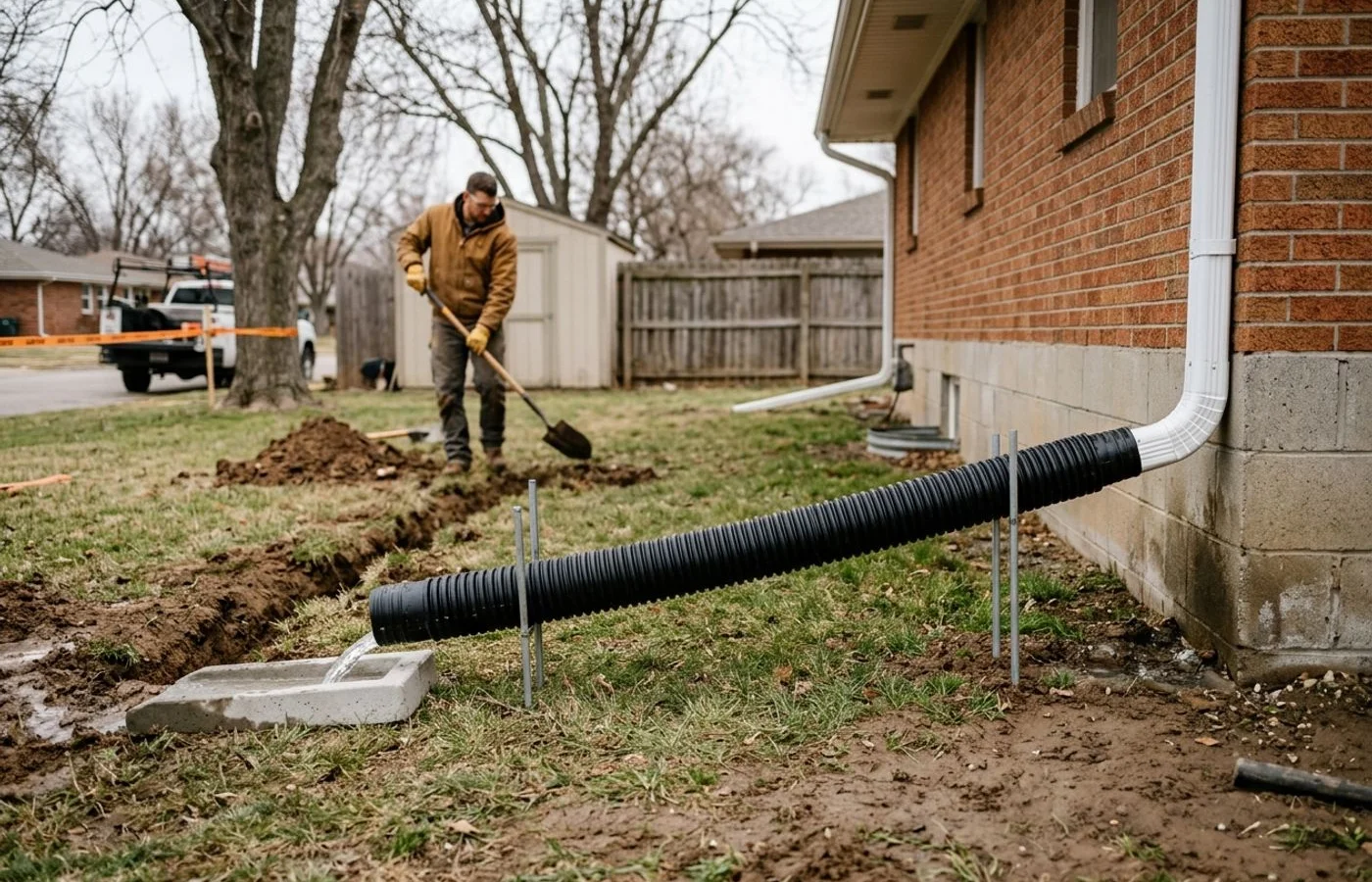
- Extend downspouts 6 to 10 feet from the wall, or connect them to underground PVC pipe
- Repair splash blocks and ensure your gutters have the correct capacity for heavy downpours
- Clean gutters twice a year so they do not overflow during intense spring storms
These simple adjustments are highly effective and inexpensive DIY projects. The right grading and gutter setup can sometimes solve the entire problem.
Layer 2: Manage yard drainage
Yard drainage takes over once the roof water is safely routed away from the house. Standing water in your lawn will eventually move closer to the foundation if ignored.
Our region features dense clay and silty clay soils common across Sedgwick County. This soil type absorbs water very slowly and expands significantly when wet. We see this expansion put massive hydrostatic pressure against concrete basement walls.
Surface water management prevents that pressure from building up in the first place.
- Fix low spots near the house that trap and hold rainwater
- Cut swales or shallow drainage ditches where needed to route surface water past the home
- Install French drains or perforated drain tiles wrapped in landscape fabric for chronic problem areas
Our crews install these systems to permanently redirect ground moisture. For persistent yard pooling, our yard drainage service handles the larger excavations and pipe installations.
Layer 3: Interior perimeter drainage and sump
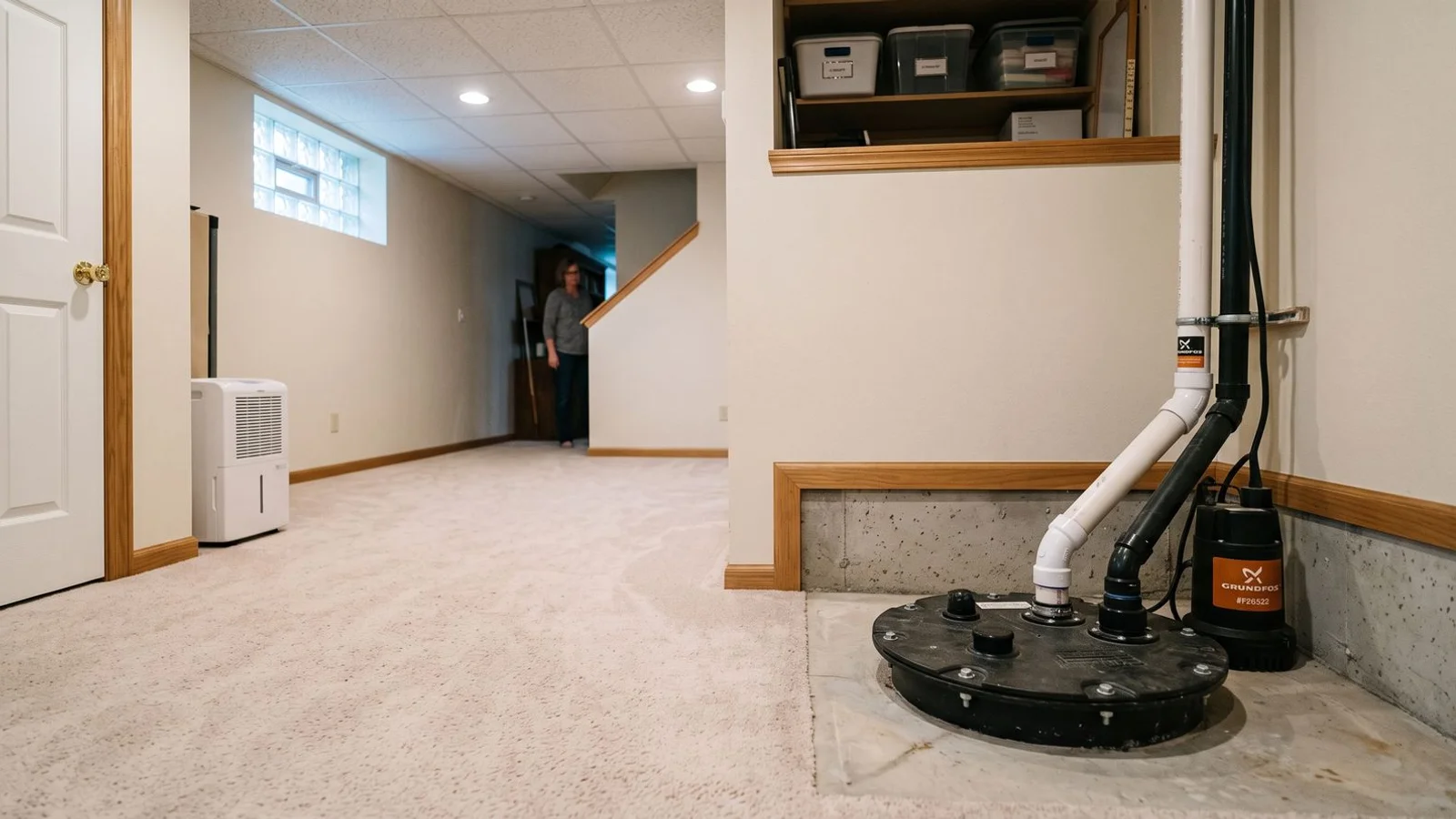
Interior drainage systems become necessary when exterior fixes fall short or water is already inside. This setup catches seepage at the wall-floor joint and actively moves it to a collection pit.
Our technicians consider this the most reliable safety net for older properties. The average cost of a flooded basement cleanup in the US reached $4,000 in 2026. We view an interior system as a direct investment against those expensive water damage bills.
A proper installation includes cutting the concrete floor and laying perforated PVC pipe. Our teams then connect this channel to a primary sump pump.
- Interior perimeter drainage installed at the critical wall-floor joint
- Sump pump sized to handle the specific water volume of your property, typically a 1/3 HP unit
- Discharge line routed well away from the house so the expelled water does not recirculate
These components work together to actively lower the water table beneath your floor. See our interior vs exterior waterproofing guide for the structural tradeoffs. Our specialists find that interior work remains the most common and cost-effective recommendation for Wichita metro homes.
Layer 4: Battery backup
A battery backup keeps your sump system pumping when the main power fails. This secondary pump provides critical protection during severe weather events.
Our primary pumps run on standard household electricity. Spring storms in Kansas frequently cause temporary grid outages just when you need your pump the most. We install backup systems to prevent catastrophic flooding during these exact moments.
A new 75 amp-hour 12V battery can typically power a 1/3 HP backup pump for 5 to 7 hours of continuous operation. Our tests show this translates to one to three days of non-continuous cycling.
For a deeper look into system sizing and requirements, review our detailed article: do I need a battery backup sump pump.
Layer 5: Humidity control
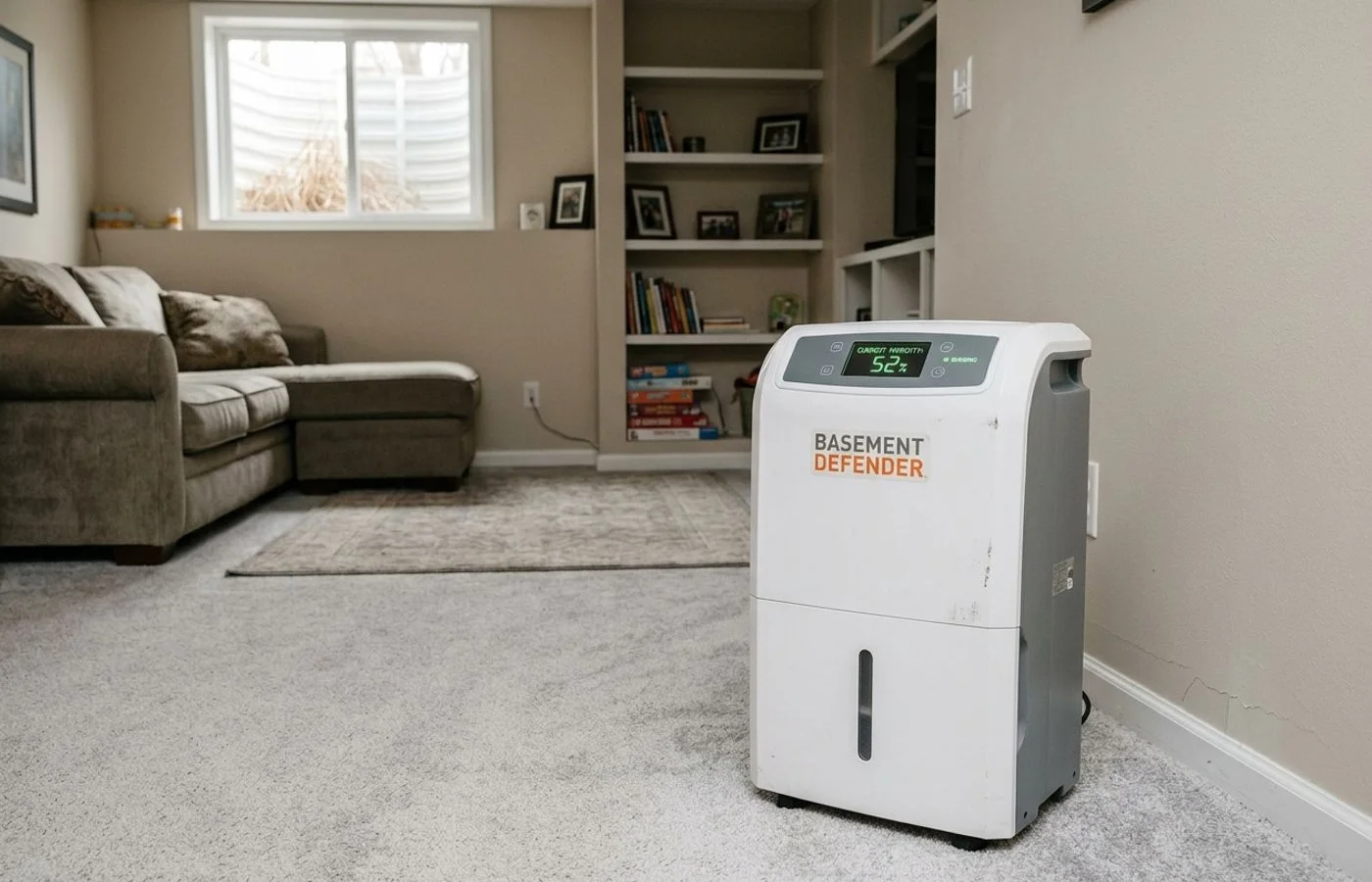
Ambient humidity causes dampness even in a completely sealed and dry basement in Kansas. A dedicated dehumidifier actively pulls moisture from the air to stop condensation on cool surfaces.
Our area experiences high summer humidity levels that easily penetrate subterranean spaces. This sticky air condenses on cold concrete block walls and plumbing pipes. We recommend keeping the relative humidity below 55 percent to prevent mold growth and musty odors.
A standard 50-pint or 70-pint basement dehumidifier with a continuous drain hose handles this job effortlessly.
Standalone dehumidification is a climate management tool, not a substitute for structural waterproofing. Liquid water intrusion requires a physical barrier or drainage system to correct. We explain this vital distinction fully in our waterproofing vs dehumidifier guide.
Layer 6: Exterior waterproofing (if needed)
Exterior waterproofing membranes stop water at the outside source before it ever touches the concrete. This intensive method is reserved for homes with heavily deteriorated walls or persistent moisture issues.
Our crews handle this by excavating the dirt around the foundation down to the base footing. The exposed wall is cleaned and coated with a thick polymer-modified asphalt membrane. We often add a dimpled drainage board to direct soil water straight down to an exterior French drain.
This project requires heavy machinery and significant landscaping disruption. Our team only recommends full exterior excavation when interior systems cannot properly address the structural decay.
The Kansas seasonal cycle
Consistent maintenance requires planning your inspections around the changing calendar. You can catch small issues before they require expensive emergency repairs.
Our local climate demands a proactive approach to home maintenance. Sedgwick County sees roughly 35 distinct freeze-thaw cycles each year. We advise following a simple seasonal checklist to monitor your foundation.
- Late winter: Check downspouts and ensure grading is intact before the heavy spring rains hit
- Spring: Watch the basement walls for active seepage after big storms, noting exactly where moisture enters
- Summer: Monitor the ambient humidity and run your dehumidifier on a continuous setting if needed
- Fall: Clean the gutters, test the primary sump pump float switch, and check the battery backup charge
- Any time: Photograph any new symptom or wall crack with a date stamp for your records
This simple rhythm keeps you in control of your home’s moisture management.
What DIY can do, and what it cannot
Knowing your limits is crucial when evaluating how to keep a basement dry year-round. Some tasks are perfect for weekends, while others require specialized equipment and training.
Our service calls often involve fixing well-intentioned but failed DIY waterproofing attempts. Incorrectly applying hardware store sealants over structural cracks usually traps water inside the wall block. We have broken down the typical division of labor below to help you plan your projects.
| Project Type | DIY Suitability | Professional Requirement |
|---|---|---|
| Landscaping & Grading | Excellent for DIY. Adding dirt for a 6-inch slope is a highly effective weekend project. | Required only for massive yard re-grading or complex retaining walls. |
| Gutter Maintenance | Perfect for DIY. Extending downspouts and clearing leaves takes very little time. | Only necessary if replacing the entire seamless gutter system. |
| Interior Drain Systems | Not recommended. Requires jackhammering concrete and precise pipe sloping. | Strictly professional. Mistakes lead to flooded floors and ruined foundations. |
| Sump Pump Installation | Possible for direct replacements, but sizing and pit digging are difficult. | Recommended for new pits, battery backups, and proper discharge routing. |
| Exterior Waterproofing | Not recommended. Digging trenches by hand is dangerous and impractical. | Strictly professional. Requires heavy excavation machinery and commercial sealants. |
These professional jobs rely on specific craft skills and commercial-grade materials where doing it wrong wastes your money.
Free diagnostic visit
Getting a professional opinion is the next logical step if your easy fixes fail. A thorough inspection identifies exactly where the water is bypassing your defenses.
Our local experts provide a free, on-site look for any homeowner struggling with persistent dampness. The technician will tell you exactly which protective layer is failing and what it takes to permanently resolve it.
We never guess. The data drives the solution. Book your inspection directly through our basement waterproofing service or call (316) 613-4575 to get started.