Steel Push Piers vs Helical Piers
Which underpinning method fits your home? Learn how steel push piers and helical piers work in Kansas soil and when each is used.
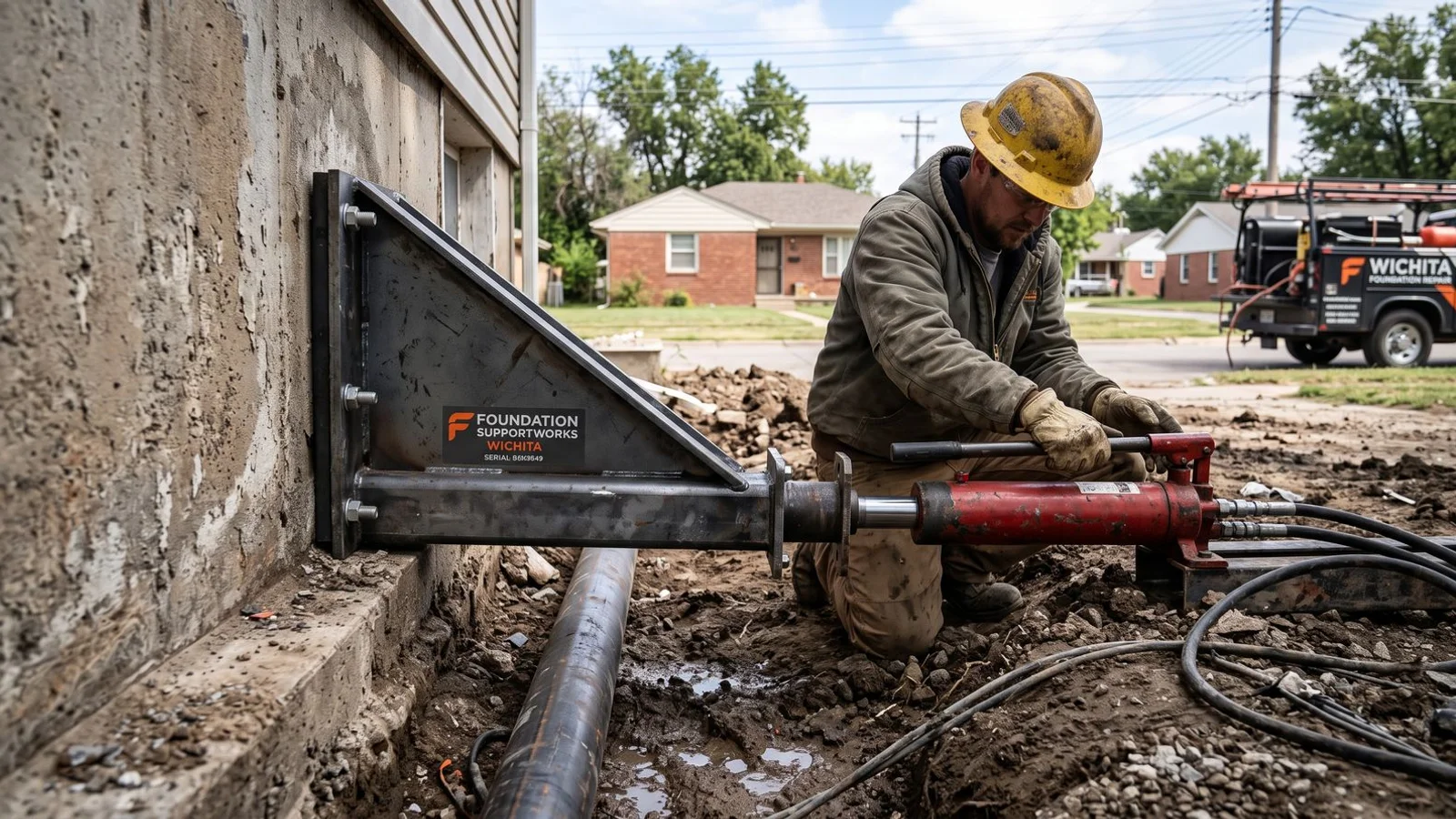
We frequently map foundation settlement across south-central Kansas homes.
The heavy montmorillonite clay in this region acts like a massive sponge. It expands significantly when wet and shrinks drastically during dry spells.
We see this aggressive shrink-swell cycle crack concrete and shift footings daily. Choosing between push piers vs helical piers is the critical step for permanently fixing these issues.
Our team will explain exactly how both of these steel piers foundation systems work. Let’s review the engineering data and installation facts so you can confidently evaluate a repair plan.
Steel push piers
A steel push pier is a thick galvanized pipe hydraulically driven deep into the ground using the house’s weight as resistance. This system completely bypasses the unstable active soil zone to anchor a heavy house on solid bedrock or dense strata.
We utilize these 2 7/8-inch steel shafts because they offer incredible compressive strength. The installation crew attaches a heavy-duty bracket to the exposed foundation footing. We then use a portable hydraulic ram to push successive steel sections straight down.
Pressures frequently exceed 10,000 PSI during this process in Sedgwick County. Our technicians continue driving the pipe until it hits materials that absolutely will not compress. This precise point of absolute physical resistance is known in the industry as refusal.
We rely on this method because the load transfers entirely from the compromised topsoil into the structural pier. The solid steel shaft carries that massive weight down to competent ground.
These piers work best under very specific conditions:
- The home is heavy enough to provide adequate reaction force for the hydraulic drive.
- Stable bedrock or load-bearing strata exist deep enough to reach with the steel shafts.
- The property sits on a deep active clay zone that shrinks and swells seasonally.
- The structure requires a significant vertical lift to return to its original elevation.
We find that most established masonry homes in the Wichita metro fall perfectly into this category. The active soil zone here often extends 12 to 15 feet below the surface. Our crews easily bypass that entire problematic layer to find permanent stability.
Helical piers
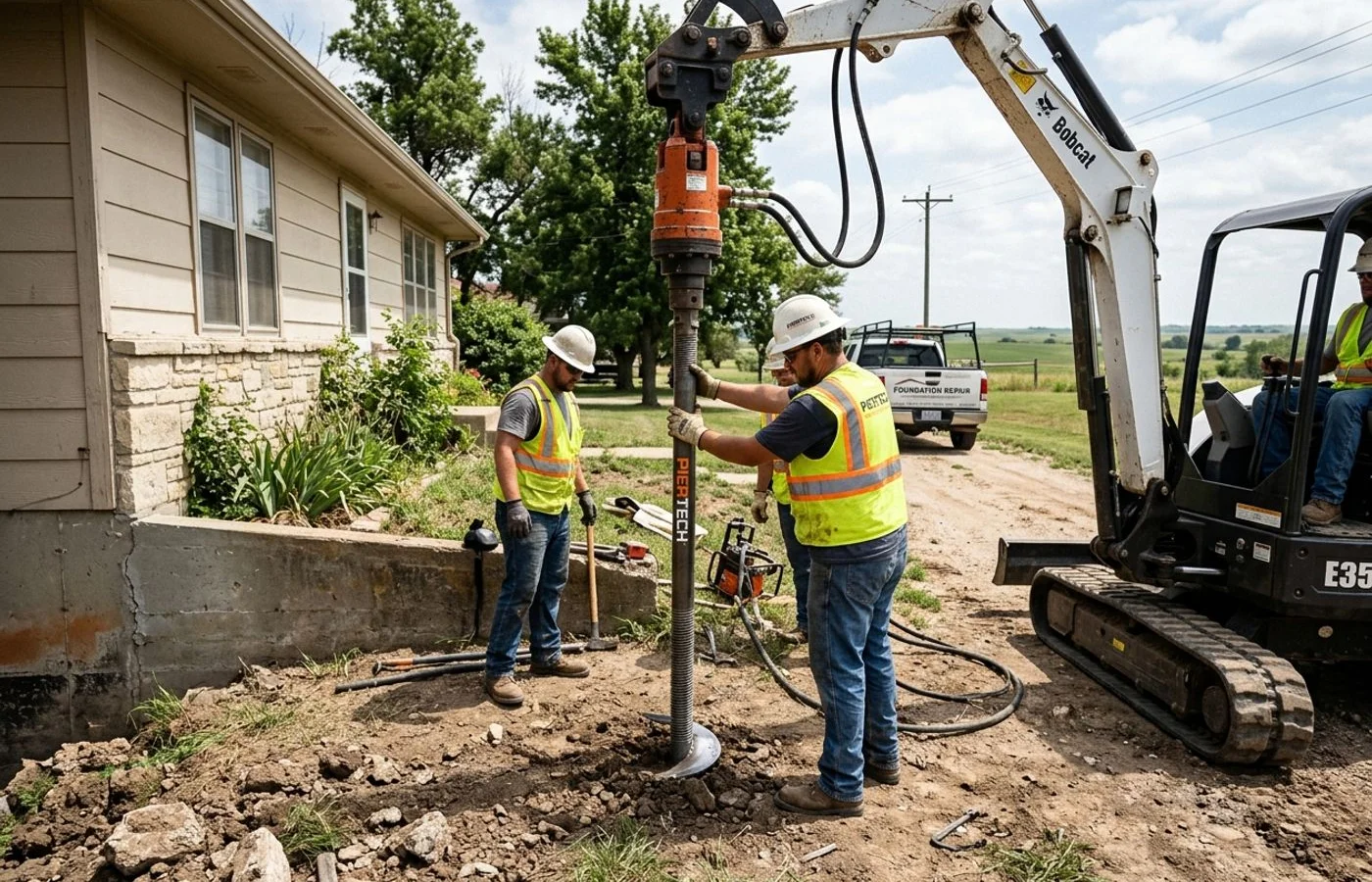
A helical pier acts like a massive steel screw anchor turned directly into the earth by a hydraulic torque motor. This system generates holding capacity independently of the building’s weight by locking into stable soil layers.
We use these steel shafts with welded helical plates for situations lacking heavy overhead resistance. The plates physically cut through the dirt instead of just pushing it aside. Our crews execute helical pier installation by monitoring the rotational resistance.
Engineers calculate the exact load capacity by reading the drive motor torque. We know a pier is ready to support the house when it hits a target installation torque, which regularly falls between 3,000 and 6,000 foot-pounds. This direct mathematical relationship means the installation torque verifies the exact bearing capacity on the spot.
Because they do not require a heavy structure above them, helical units solve different problems. We regularly specify this anchoring approach for the following scenarios:
- Lighter frame structures that cannot generate enough opposing weight to drive a standard push pier.
- Brand new construction sites before the framing and roofing add substantial weight to the footings.
- Additions, porches, and outbuildings where the total structural load remains limited.
- Specific soil profiles where real-time torque readings must verify the capacity at exact depths.
We find these screw-driven options provide incredible versatility for residential projects. The installation process is smooth and causes minimal vibration to the surrounding property.
When we choose one over the other
We choose push piers for heavy homes needing a deep lift, while helical piers handle lighter loads like porches. The final selection depends entirely on your home’s structural weight, the foundation type, and local soil conditions.
Our team approaches every single house in Kansas as a unique engineering challenge. A full-size brick home that has settled deeply into the shrink-swell zone usually gets push pipes. We can drive them reliably past the 15-foot mark to hit absolute refusal on bedrock. The system then provides the leverage needed to lift the massive structure back to grade.
Helical units come off the truck when the target depth would require excessive push force against a light frame. We also use them when property access is extremely tight for standard excavation equipment. A common scenario involves supporting a new room addition where the full architectural load is not yet in place.
Our engineered plans frequently feature hybrid repair strategies. We might place heavy-duty push systems under the main two-story brick structure. The crew then installs helical anchors under a lighter attached garage or poured concrete patio.
Here is a quick breakdown of how these two options compare on the job site:
| Comparison Factor | Push Piers | Helical Piers |
|---|---|---|
| Ideal Structure Weight | Heavy (brick, two-story, large footings) | Light (porches, additions, frame construction) |
| Capacity Verification | Driven to absolute physical refusal (PSI) | Measured by installation rotational torque |
| Primary Advantage | Maximum lifting capability for settled homes | Independent load bearing without overhead weight |
Warranty and engineered plans
Both piering methods require an engineered plan approved by the local building department before installation begins. This strict permitting process ensures your foundation fix meets all municipal safety and structural codes.
We strictly follow the MABCD Directive 14-B15 for properties located in Sedgwick County. A 2026 review of local building codes confirms the city requires a certified structural engineer to provide a sealed drawing specific to your site.
Our project managers ensure your plan includes these mandatory details:
- The exact structural pier count required for the load.
- The precise spacing measurements between steel brackets.
- The target depth and installation pressure requirements.
Once the steel is in the ground, the system carries substantial protection. We use high-quality, galvanized American steel components manufactured to last. The manufacturer provides a 25-year to lifetime warranty on the physical steel brackets and pipe sections. Our company backs the actual installation workmanship with a dedicated guarantee.
There is nothing magical or mysterious about how these systems hold a house in place. We simply transfer the physical load from failing topsoil directly onto stable, deep strata. That stable ground does not shrink, swell, or move with the changing Kansas seasons. Once the technician sets the pier and locks the bracket, the downward settlement stops completely.
What this looks like on a real job
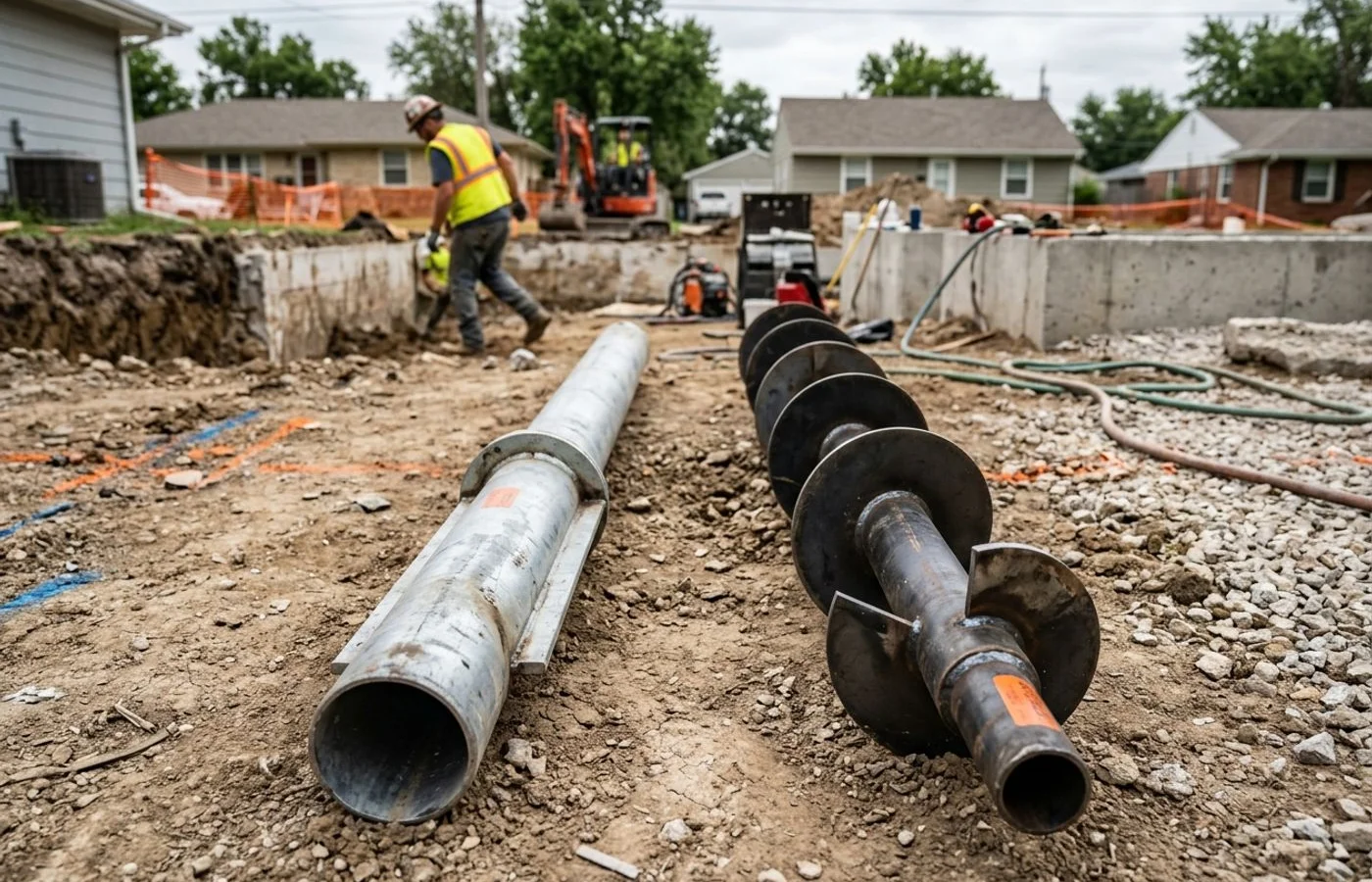
A typical Wichita residential foundation repair takes one to three days from start to finish. The process requires precision excavation, hydraulic lifting, and careful soil backfilling. We follow a highly standardized procedure to protect your property and ensure a permanent fix.
Here is the exact step-by-step process for a standard project:
- Diagnosis and pier count. We map the floor elevation variations across the home using precision lasers to calculate the exact number of supports required.
- Engineered plan. A structural engineer drafts the push, helical, or hybrid layout with precise spacing and depth targets.
- Permit and install. We secure the required MABCD permit, excavate the footing, and drive the steel using portable hydraulic equipment.
- Lift and lock. The crew utilizes synchronized hydraulic pumps to lift the structure back to level and permanently lock the brackets.
- Site restoration and warranty registration. We backfill the excavated soil, tamp it down, and file your long-term protection documents.
Our heavy equipment operators treat your yard with respect during the entire excavation phase. The total time our trucks spend on site is kept to an absolute minimum to reduce disruption.
Related decisions
Deciding on structural repair often leads to questions about the long-term viability of the building. We offer specific resources to help you evaluate the complete picture before spending money.
If you are still weighing repair against full replacement, our foundation repair vs replacement guide walks through that critical financial decision. The underlying cause of most local damage is the highly expansive regional soil.
We highly recommend reading our why foundations crack in Kansas guide as a companion piece to this technical overview. Those articles provide essential context for understanding your specific property damage.
Free on-site inspection
Scheduling a professional evaluation is the only reliable way to get a verified repair plan. We provide clear, data-driven recommendations built for your exact property conditions.
Book a free inspection or call (316) 613-4575 to speak with a specialist. Our team will measure your floor elevations and tell you which pier system actually fits your home.
Take action today to protect your largest financial asset from further structural damage.