Why Is Water Pooling in My Yard?
Grading, clay soil, downspouts — learn the common causes of standing water in your Wichita yard and the risk it poses to your foundation.
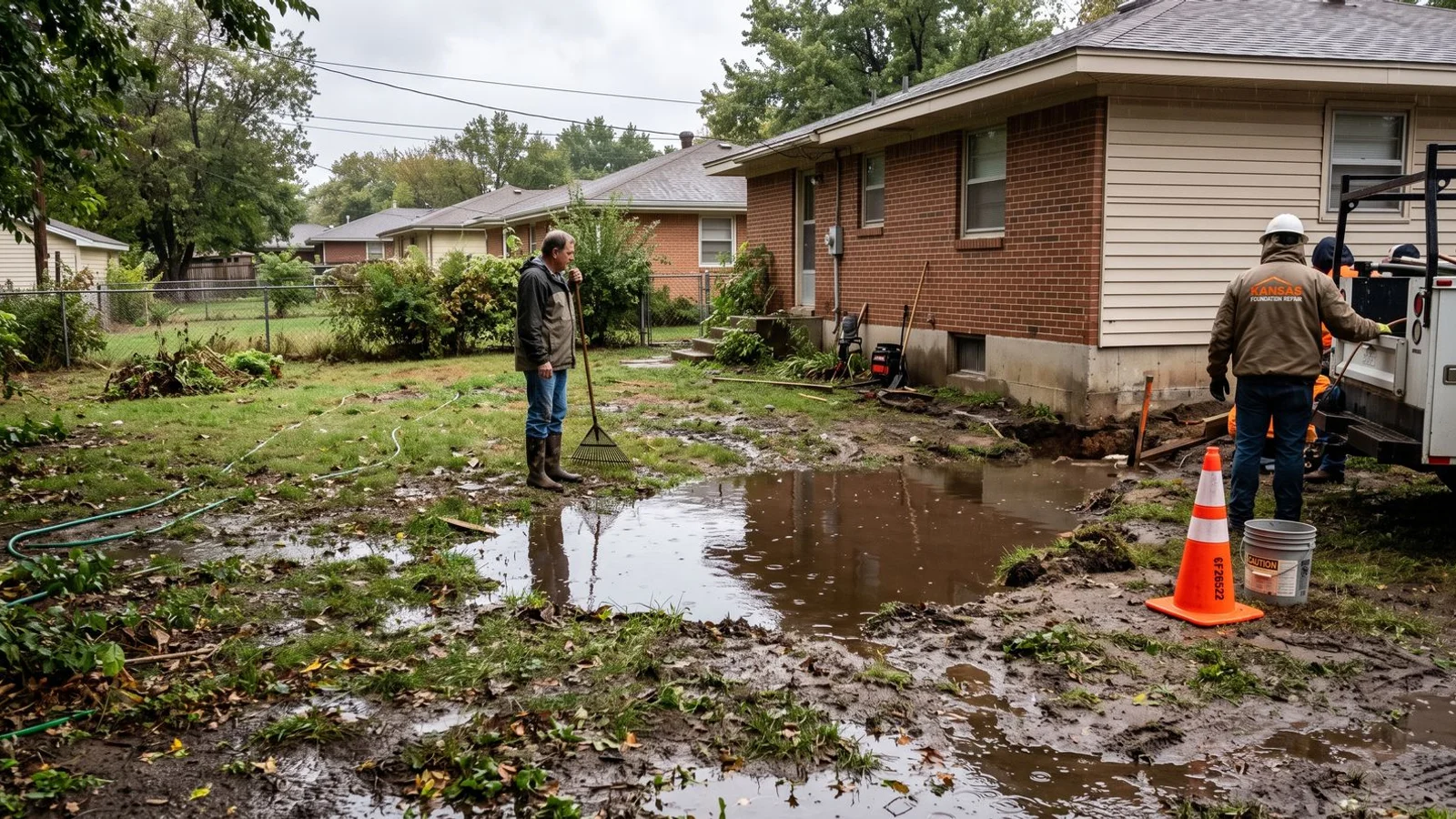
We see it happen every spring after those heavy May and June rains hit Wichita. A soggy lawn quickly turns into a major structural headache.
That standing water is rarely just a landscaping nuisance.
The real issue is the expansive clay hidden beneath the grass. Saturated soil pushes against concrete basement walls with incredible force.
We will walk you through the primary standing water in yard causes so you know exactly what to look for. Then, you will learn a few practical ways to fix that poor yard drainage.
Four common causes
Every property has unique grading challenges. We trace almost every flooded yard call in the Wichita metro to a few specific culprits. Identifying the root cause makes finding the right solution much easier.
- Flat or reverse grading. The ground slopes toward the house instead of away from it. Water simply sits exactly where it falls.
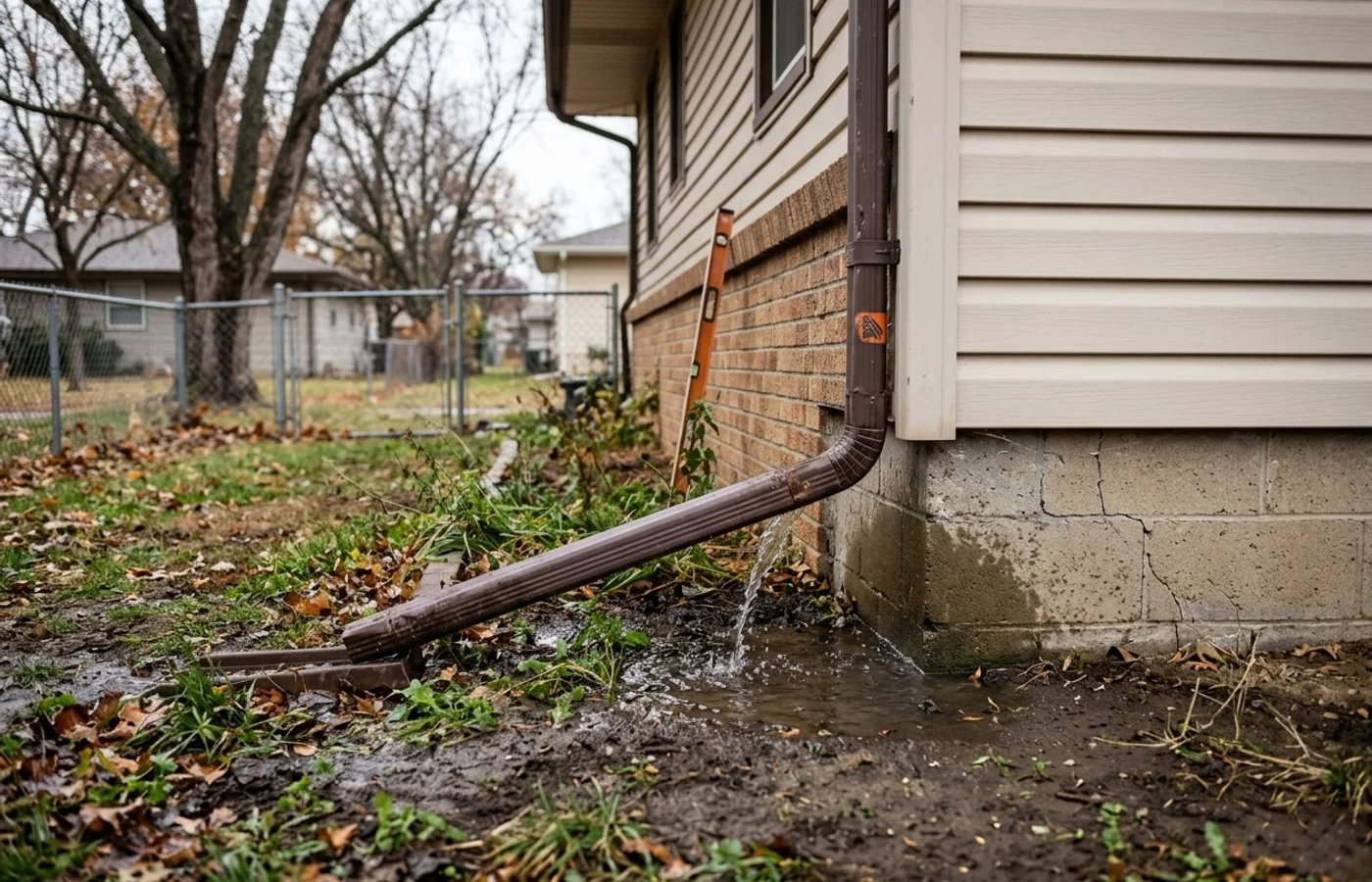
- Downspouts dumping against the house. Roof water pools at the foundation because the downspouts terminate too close to the wall. An average roof sheds hundreds of gallons during a typical Kansas storm.
- Dense clay soil. Local soils like the Wymore-Ladoga clay complex have a terrible infiltration rate. Even mild rain events pool because the surface acts like a sealed sponge.
- Compaction from construction. Heavy equipment on newer lots in places like Maize or Bel Aire compacts the topsoil. This creates a hardpan layer that completely refuses water.
We frequently find yards suffering from a mix of two or three of these issues at once. Addressing just one problem might not solve the whole drainage puzzle.
The Kansas clay factor
South-central Kansas sits on highly expansive clay that behaves like a stubborn sponge. We constantly battle this specific soil type because of its extreme shrink-swell cycle. Once the ground gets saturated, it outright refuses to absorb another drop.
That combination creates a perfect recipe for yard pooling water.
- Dry clay acts almost like solid concrete and repels moisture.
- Wet clay swells dramatically and creates intense lateral earth pressure against basement walls.
- Drying clay shrinks away from the house to create wide gaps.
- Those new gaps allow even more rainwater to rush straight down to the footings.
We often hear from homeowners who lived totally flood-free for a decade before the pooling suddenly started. A single unusually wet spring can permanently alter how the local soil behaves. The resulting drainage problems will often persist throughout the entire year.
The connection to the foundation
Chronic puddles near your exterior walls represent a serious structural threat. We consider proper water management to be the most critical preventive maintenance you can do for your home. You can read our detailed poor drainage and foundation guide to understand the exact mechanics.
The damage progresses through a very predictable cycle.
- Saturated clay exerts thousands of pounds of pressure, causing basement walls to bow inward.
- The wet-then-dry soil cycle shrinks support away from footings to trigger structural settlement.
- Water easily finds small concrete cracks and enters your basement as active seepage.
- Long-term saturation completely compromises the load-bearing capacity of the earth.
We always advise clients to handle the exterior water first. A professional foundation repair in the Wichita area averages over $5,500 right now. Fixing your drainage proactively costs a fraction of that price and prevents the damage entirely.
Simple checks you can do
You can diagnose a lot of these problems yourself with a quick walk around the property. We recommend inspecting the grounds about 24 hours after a heavy rainstorm. This wait time shows you exactly where the earth fails to drain.
| Inspection Zone | What to Look For | Why It Matters |
|---|---|---|
| Distance from House | Puddles within 10 feet of the wall. | Water this close threatens the foundation directly. |
| Downspout Ends | Pipes terminating near the concrete. | Discharges must extend well beyond the backfill zone. |
| Grading Slope | Test the ground with a garden hose. | Water should flow away from the structure visibly. |
| Soil Compaction | Push a screwdriver into a wet spot. | Firm resistance indicates a hardpan layer blocking absorption. |
We use these exact same observations during our professional inspections. Catching a negative slope early gives you a chance to regrade before the basement cracks.
Fixes, ranked by cost
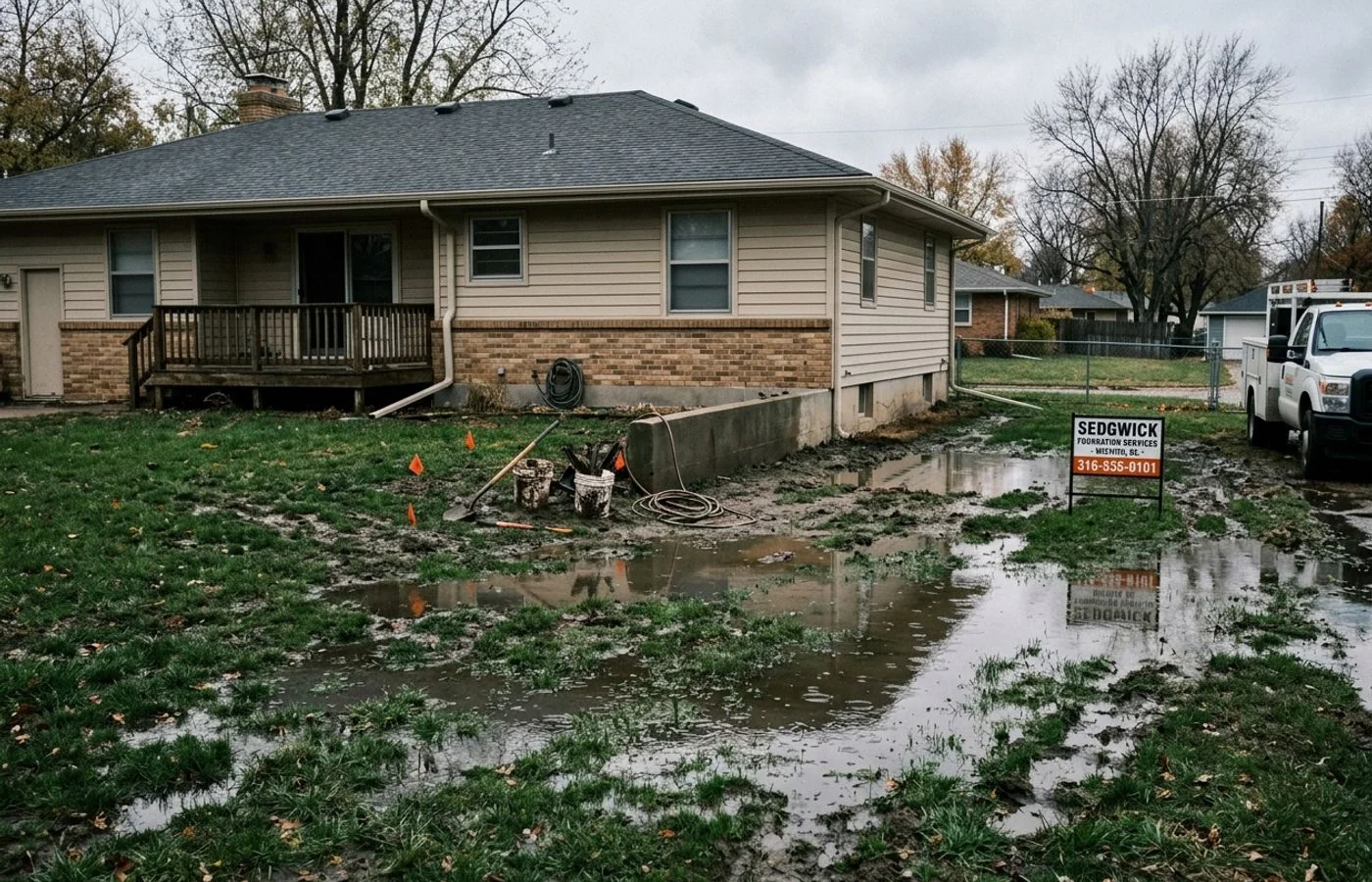
The best news for homeowners is that water management solutions scale nicely. We always suggest starting with the most affordable option that directly addresses the root cause. You can find a deeper breakdown in our French drains vs surface drains vs grading guide.
Here is the typical progression from simple tweaks to heavy-duty installations.
- Extend downspouts past the 10-foot foundation zone using rigid Schedule 40 PVC pipe.
- Regrade the affected zone so it drops at least one inch per foot away from the house.
- Install French drains or drain tile for chronic pooling that grading alone will not solve.
- Add 12-inch surface catch basins at low spots that cannot be regraded.
We rely exclusively on rigid materials for all underground trenching. Flimsy corrugated pipes will simply crush under the weight of settling Kansas clay.
Free on-site drainage assessment
Guessing at water flow problems usually leads to wasted money. We can map out the exact elevation changes on your property to pinpoint the trouble spots.
Point out where the moisture sits, and a technician will recommend the most cost-effective permanent fix.
We make it easy to schedule an evaluation through our yard drainage service page. Simply give the office a call at (316) 613-4575 to get something on the calendar today.