When Does Foundation or Drainage Work Need Excavation?
Some foundation and drainage jobs require digging. Learn when excavation is part of exterior waterproofing, deep piering, or major drainage installs.
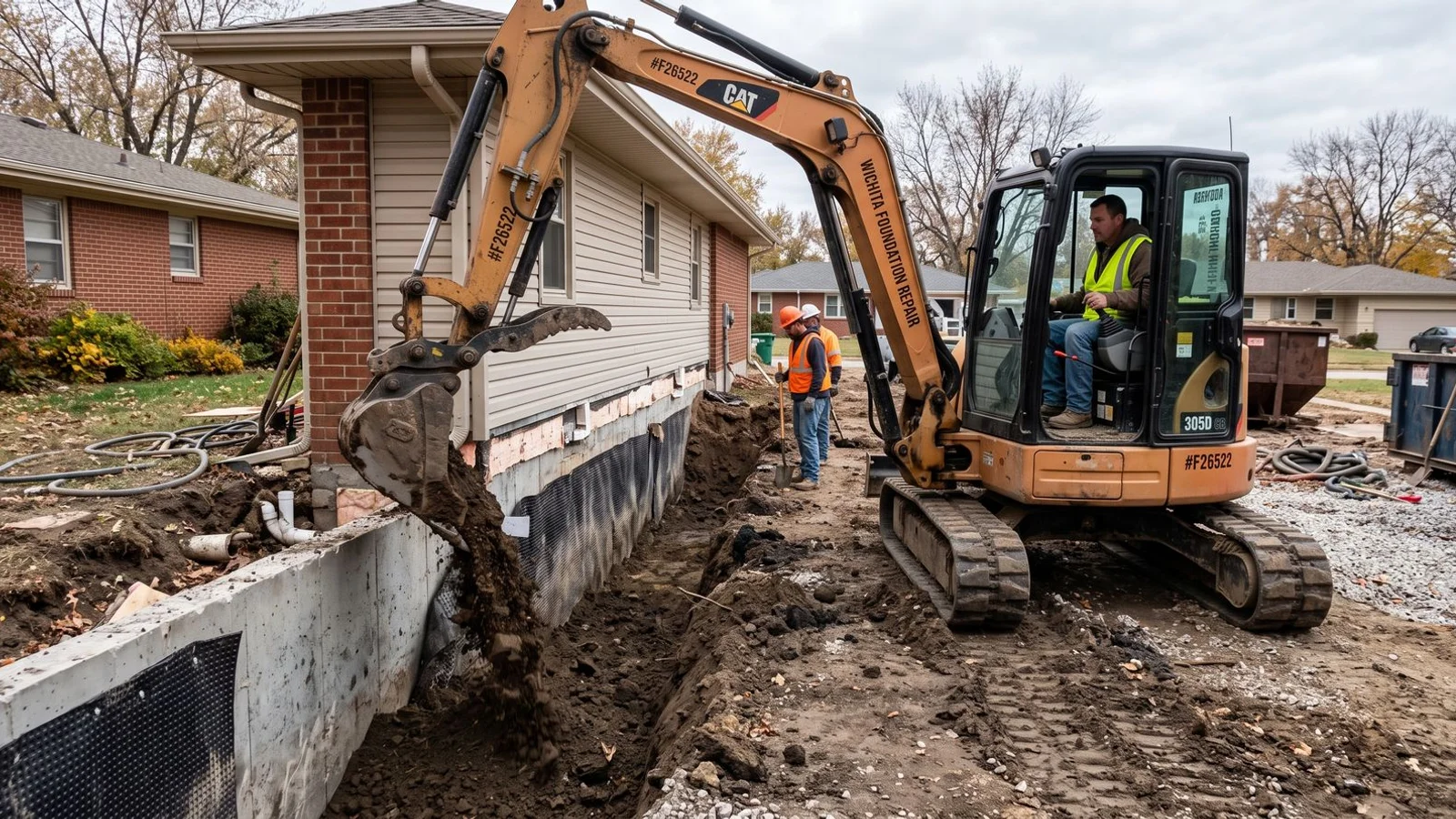
Excavation for foundation repair sounds intense. We know the thought of heavy machinery tearing up a yard is a homeowner’s biggest fear across south-central Kansas. Many people assume every major leak or crack requires moving tons of dirt.
That is rarely the case.
Advances in technology mean a vast majority of structural and water issues are solved from the inside out. We will show you exactly when a project requires heavy digging and when it can be avoided.
Here is how our team approaches the decision to dig.
When excavation is required
Three main categories of work almost always need excavation. If your project falls into these buckets, heavy digging is the only way to reach the root of the problem.
Exterior basement waterproofing
Applying a waterproof membrane to the outside of a foundation wall requires exposing that wall completely. Contractors must excavate from the ground level down to the footing.
In Kansas, building footings typically sit 30 to 36 inches deep to clear the frost line. There is no way to install an exterior moisture barrier without uncovering that entire surface.
Deep piering with limited interior access
Push piers and helical piers are usually installed from the exterior to lift and stabilize a settling home. Tight lots or spaces between structures limit the operating room for heavy hydraulic equipment.
Our crews often need to excavate a working trench to safely position the piering brackets under your foundation. These tight-access jobs require careful, localized digging.
Major drainage installations
Large French drain systems, drain tile networks tied to daylight outlets, and buried downspout collector systems all require trenching. A standard exterior French drain needs a trench at least 18 to 24 inches deep to establish a proper downward slope.
The bigger your excavation drainage project becomes, the more dirt removal is necessary.
Retaining wall footing repair
Failed retaining walls almost always require digging out the soil behind them to relieve hydrostatic pressure. We usually excavate to expose the compromised footing and rebuild or underpin it safely.
This process prevents total wall collapse.
When excavation is not required
Many foundation and drainage jobs happen with minimal or no digging at all. Modern repair methods allow contractors to fix severe structural issues right from your basement or driveway.
We utilize advanced technology to keep your yard completely intact for most common repairs. Here are the most common non-invasive solutions.
- Interior perimeter drainage: A basement waterproofing system installed under the floor slab handles leaks without touching the exterior landscaping.
- Push pier installations: Homes with adequate exterior access from grade can be stabilized with localized hand-digging at the bracket locations.
- Wall stabilization: Carbon fiber straps fix bowing walls from the inside. Products like Rhino Carbon Fiber bind directly to the concrete block, requiring zero outside dirt removal.
- Concrete leveling: Polyurethane foam injection only requires a 5/8-inch drill hole. This lifts sunken slabs without the messy digging of traditional mudjacking.
- Sump pump installation: Full basin replacements are handled entirely within the basement.
- Surface drainage: Simple yard regrading only disturbs the top few inches of topsoil.
If your quote does not include heavy digging and your project fits one of these categories, that is completely normal.
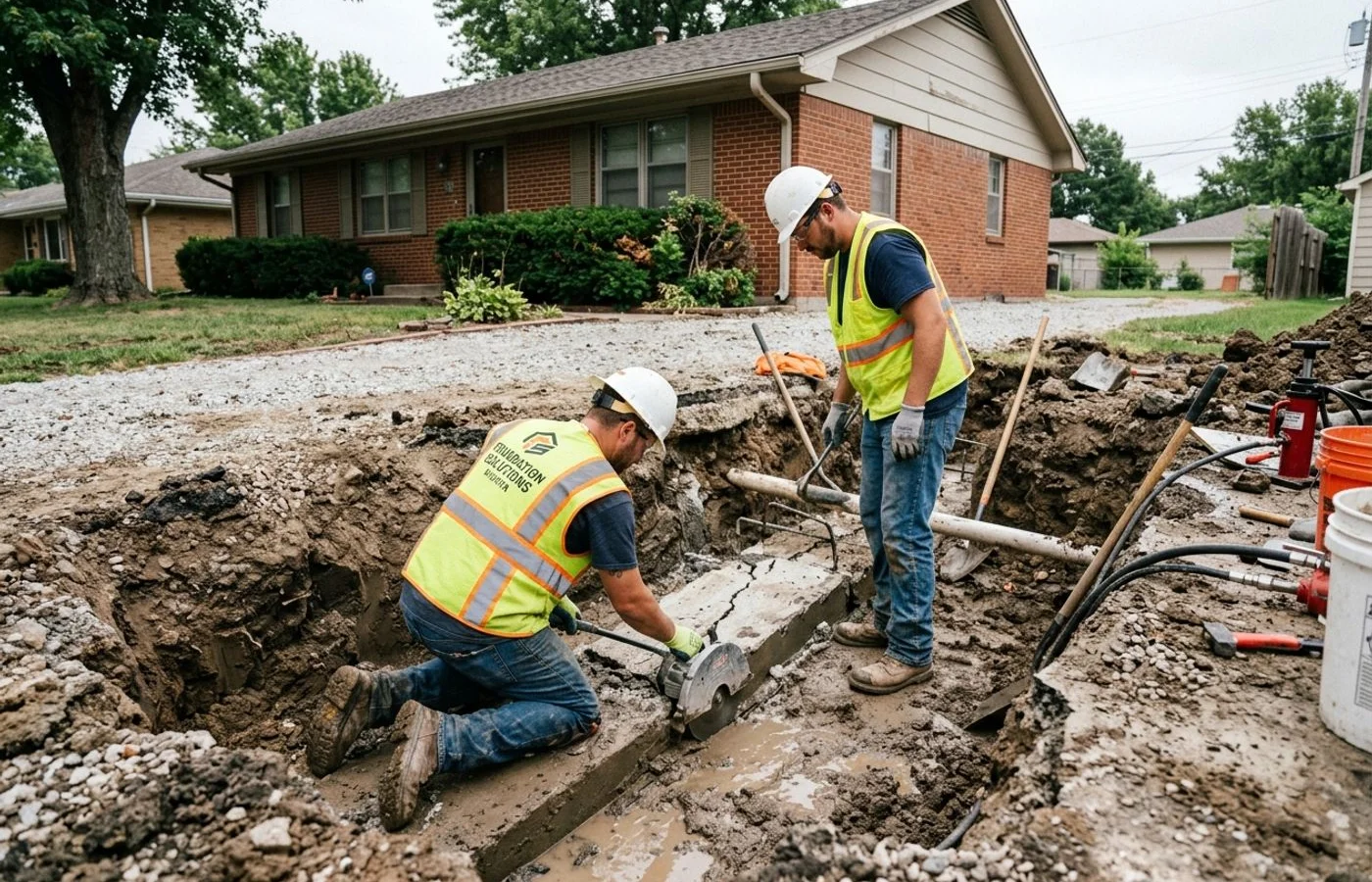
What excavation involves
When a project does require excavation, the process is highly controlled and follows strict safety protocols. Digging around a house requires precise planning to protect the structure and the people working near it.
We take these precautions incredibly seriously.
- Utility marking: Before a single shovel hits the dirt, a professional must mark or verify utility locates. Kansas law requires calling Kansas 811 and waiting two full working days for locators to mark gas, electric, water, and communications lines.
- Site protection: Protecting your property is a top priority. Turf can often be lifted carefully and replaced once the job is done, while mature trees receive root-protection measures.
- Controlled excavation: Operators dig only what the specific engineering scope requires. Drainage trenching is precisely sized to match the corrugated pipe and surrounding washed gravel specification.
- Support during the dig: Workplace safety mandates require sturdy shoring for deeper trenches. The Occupational Safety and Health Administration (OSHA) requires protective cave-in systems for any trench five feet or deeper.
- Restoration: Crews backfill the trench in engineered lifts, mechanically tamping the soil every few inches to prevent future settling. We restore the proper surface grade to ensure rain flows safely away from your home.
Cost implications
Heavy digging significantly increases the total price of a repair project. You are paying for heavy machinery transport, extra crew hours, specialized safety materials, and comprehensive site restoration.
Our estimates break down these specific expenses so you know exactly what you are funding.
This added labor is why an interior water management system often costs 50% less than a full exterior dig. Exterior excavation requires removing landscaping, concrete pathways, and sometimes even porches.
Check out our interior vs exterior waterproofing guide for a complete breakdown of the tradeoffs.
Higher costs do not mean digging is a bad value. Some foundational issues simply cannot be fixed from the inside.
We recommend full exterior exposure only when the structural integrity of the home demands it.
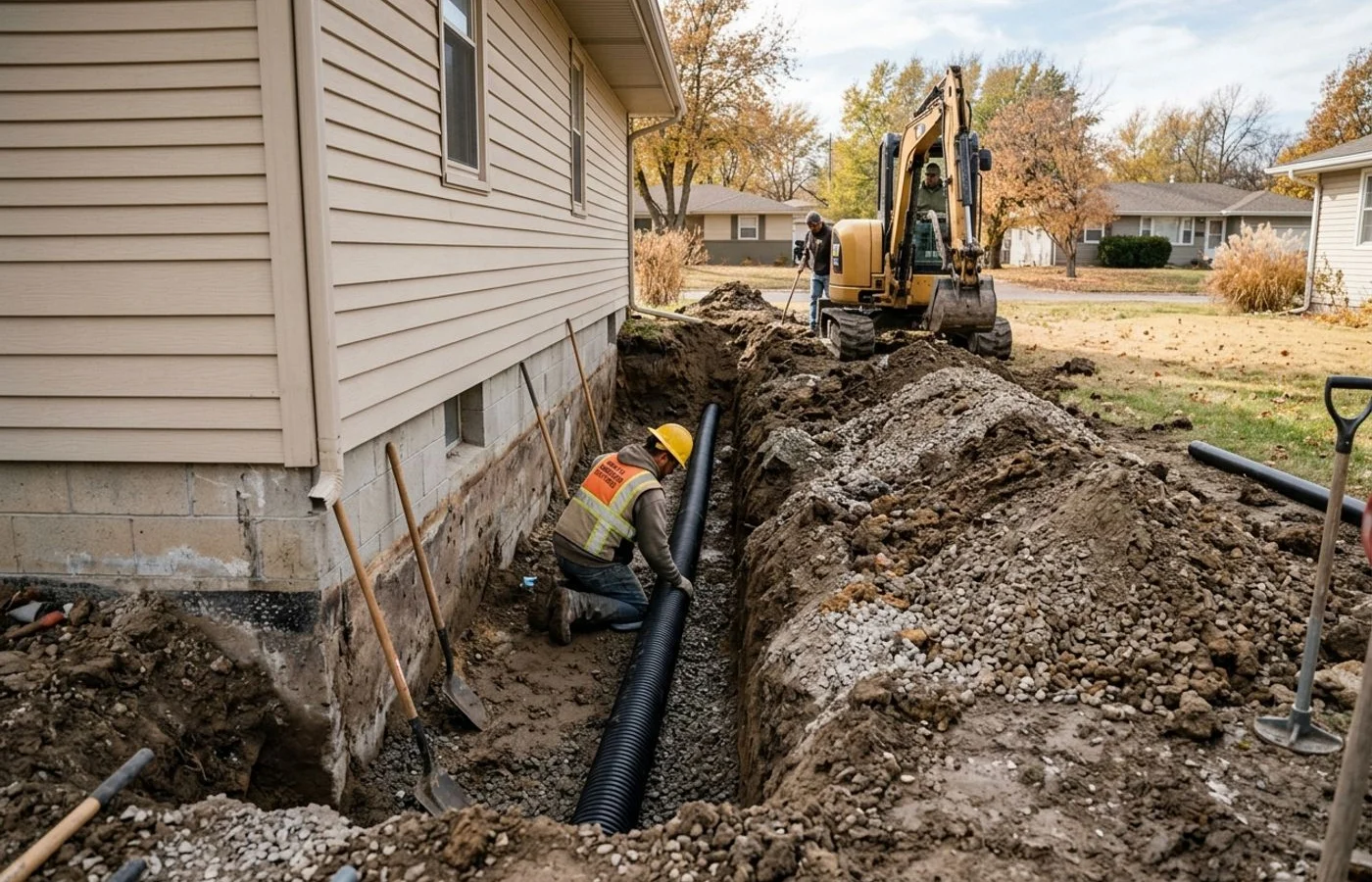
Coordinating excavation with the rest of the project
Combining multiple exterior projects into one single dig is the smartest way to save money. Opening up the ground once allows contractors to address waterproofing, drainage, and structural support simultaneously.
We highly suggest bundling tasks if the heavy equipment is already in your yard. A few common combinations include:
- Waterproofing and Drainage: Adding an advanced French drain to an open exterior moisture barrier trench.
- Downspout Burial: Tossing a solid PVC downspout collector pipe into an already open trench. The Environmental Protection Agency recommends extending downspouts at least 10 feet away from the foundation.
- Foundation Repair and Grading: Fixing the footing and regrading the soil simultaneously.
Your estimator will flag these logical bundle opportunities during the initial inspection. This proactive approach helps you maximize the value of the machinery on site.
Timeline
Excavation projects naturally run longer than interior-only jobs because of the heavy site work involved. Weather also plays a massive role, as spring rains in south-central Kansas can quickly turn an open trench into a muddy delay.
We build realistic buffers into the schedule to account for these specific regional challenges. Typical timelines for these larger scopes include specific milestones.
- Exterior waterproofing: Expect several days to a full week, depending on the linear footage of the exposed wall.
- Deep piering with excavation: A day or two is required for dirt removal before the actual steel piering process even begins.
- Major drainage installations: Complex networks take a few days, depending heavily on the required trench length and soil conditions.
- Retaining wall rebuild with footing work: Rebuilding a structure with major footing work spans multiple days to allow for concrete curing.
We provide real, honest timelines in the written quote. Nobody wants to be surprised by a week-long delay disguised as a fast weekend fix.
Free on-site estimate
Determining exactly when is excavation needed requires a professional look at your specific home. An expert evaluation takes the guesswork out of the process.
We honestly scope the project and explain exactly why digging is necessary if your property requires it. A cheaper, less invasive interior option might solve the problem just as well, and an expert will tell you if that is the case.
Book a thorough inspection through our excavation service page or call (316) 613-4575 to schedule an appointment.